Neglect and Verbal Abuse
Abuse can affect a person for their entire lifetime. Faulkner wrote, “The past is never dead. It’s not even past.” How true it is for so many cases of abuse. It is not uncommon for survivors of child abuse and neglect to encounter responses like, “You’re not a child anymore, get over it,” from others who may not fully understand the lasting impact of childhood trauma. This type of dismissive or invalidating response can be hurtful and unhelpful to survivors who are struggling to heal from their past experiences.
There has been a lot of research done on the topic, and I’ll share some of it with you.
We must look at different forms of abuse that’s not so readily seen to understand the full impact of abuse.
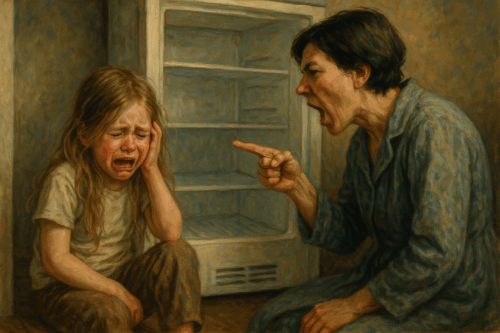
Verbal abuse and neglect can have life-long effects on the victims. If you’re told repeatedly “you won’t amount to nothing;” “You’re stupid;” or “How did you get that damn dumb?”
You come to believe your abuser and think of yourself as dumb or stupid. If you call your daughter a “little slut” that will remain with her for the rest of her life. And if you repeatedly call her a slut; she will begin to think of herself as a slut.
Neglect is another form of abuse that leaves such a negative impression upon a child. We went without food, clothing, and medical attention because we had no money. And we had no money, because my dad would go to bars on payday and spend “every damn dime” of his paycheck.
We never had lunch money for school. We didn’t have money to go to book fairs or any other type of program at school. The teacher would ridicule me over lunch money every Monday morning. How I begged my mother to keep out lunch money for us because we’d get into trouble in front of the whole classroom. Or I would be scolded for not wearing a jacket to school—I had no jacket to wear to school. The damage that was done to me over neglect is engrained in me.
Childhood abuse and neglect can have profound and long-lasting effects on individuals, impacting their emotional, psychological, and physical well-being well into adulthood. The trauma experienced during childhood can shape a person’s sense of self, relationships, and overall functioning in significant ways.
I, to this day, cannot look strangers in the face. It feels like if I do, they’ll know what happened to me. I felt very much “less than” my school mates. And they were vicious as children can be—-I was made fun of because I only had two dresses to wear to school.
Because I was told I was stupid; I believed it and feared how I’d make it through school. When, in fact, I have above normal intelligence. So, sit me in a classroom and I did everything to try and escape all the humiliation I felt.
By the time I got to high school; I knew I wasn’t stupid. But the damage of my grade school and junior high school still haunts me to this day. Teachers, please try and think about “how will this affect this students’ self-esteem, or will I be humiliating a student in front of the class?”
Sexual abused by your dad will leave you feeling shame, humiliation, and hate toward your dad. I was fortunate that I didn’t recall my abuse until after my dad passed, or I would have probably shot him.
Telling someone to “get over” their childhood abuse minimizes the complexity of their experiences and the challenges they may face in the healing process. It overlooks the deep emotional wounds that survivors carry and the ongoing impact that trauma can have on their lives. The scarring from abuse is a true travesty. And that’s why we can’t “get over it and move on.”