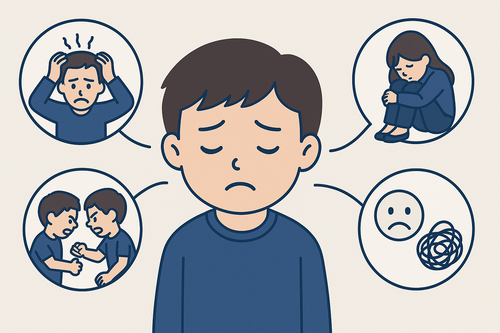
Psychological Effects of Child Abuse
According to “Adults Surviving Child Abuse,” “The abuse is rarely an isolated event. It often occurs in the context of other factors which may harm a child’s development, such as poverty, or parents with mental health or alcohol and drug problems. As children grow up within abusive environments, they develop adaptive ways of thinking and behaving to survive their childhood. In adulthood, however, the defenses and coping mechanisms that helped protect the child from the full impact of their abuse are often less constructive.”
Briere and Scott (2006) identified six key areas in which child abuse affects psychological function in adult life:
Negative pre-verbal assumptions and relational schemata: Children who are abused internalize profoundly negative messages about themselves, their place in the world and other people. These negative messages often persist into adulthood and powerfully influence how survivors interact with others and how they feel about themselves. As a result, survivors often lack the skills to mediate close relationships. They may be too defensive, aggressive, scared or shy to fully connect with the people around them.
2. Conditioned emotional responses to abuse-related stimuli: When adult survivors encounter situations, words, or experiences that remind them of their childhood abuse, they may become emotionally overwhelmed. Everyday situations may trigger intense feelings of guilt, shame, grief or anger that take a long time to fade away. These “emotional storms” can make the day-to-day life of a survivor very unpredictable and frightening.
3. Implicit/sensory memories of abuse: Child abuse often involves experiences of fear, betrayal and powerlessness – experiences that a child cannot understand or explain. Such experiences become “implicit” memories (sometimes called “body memories”) which means, when the memory returns, it does so with the physical sensations and emotional force of the original experience. These experiences, sometimes called “flashbacks,” can be terrifying.
4. Narrative/autobiographical memories of maltreatment: For many adults, abuse is a part of their life history. Making sense of this abuse poses several challenges. Why did it happen? What does it say about my family? What does the abuse say about me? These are common questions for many survivors.
5. Suppressed or “deep” cognitive structures involving abuse-related material: Physical or sexual violence are overwhelming experiences for children. They do not understand abuse, nor do they have the resources to protect themselves. Trapped in a dangerous situation, children often respond to abuse with a “last ditch” psychological defense: they suppress their knowledge of the abuse. As they grow, their knowledge of their abuse may remain “split off” from awareness, but it deeply shapes the survivor’s thinking patterns and ways of relating to others.
6. Inadequately developed effect regulation skills: Deprived of natural patterns of learning and development, survivors frequently find themselves overwhelmed by everyday situations and relationships. They often develop “avoidance” coping styles to lessen the pain of their past abuse and escape the discomfort of the present. This avoidance can take any number of forms, including withdrawing from social situations, avoiding/sabotaging personal relationships, self-medication through alcohol or drugs, or self-harming to dissociate and/or express pain.